Everyone's Q4 sale looks exactly like yours
Your Q4 sale is a percentage off and a countdown timer. So is everybody else's.
Bonobos, Native, Ciele, Malbon, Cocokind, and Pela all looked at that playbook and said no thanks. Each one picked a different offer structure, and each one solved a problem that a flat discount can't. We broke down all 6. 👇
6 offer structures to steal before your Q4 calendar locks
Every brand runs a sale. Not every brand picks the mechanic that actually fits the job. A straight discount solves a different problem than a bundle, and a bundle solves a different problem than a gift-with-purchase. The structure is the strategy.
We broke down 6 real offers from brands that matched the mechanic to the job, and pulled the version you can build this week.
| 01 of 06 |
Bonobos: run a straight percentage off one category, not everything
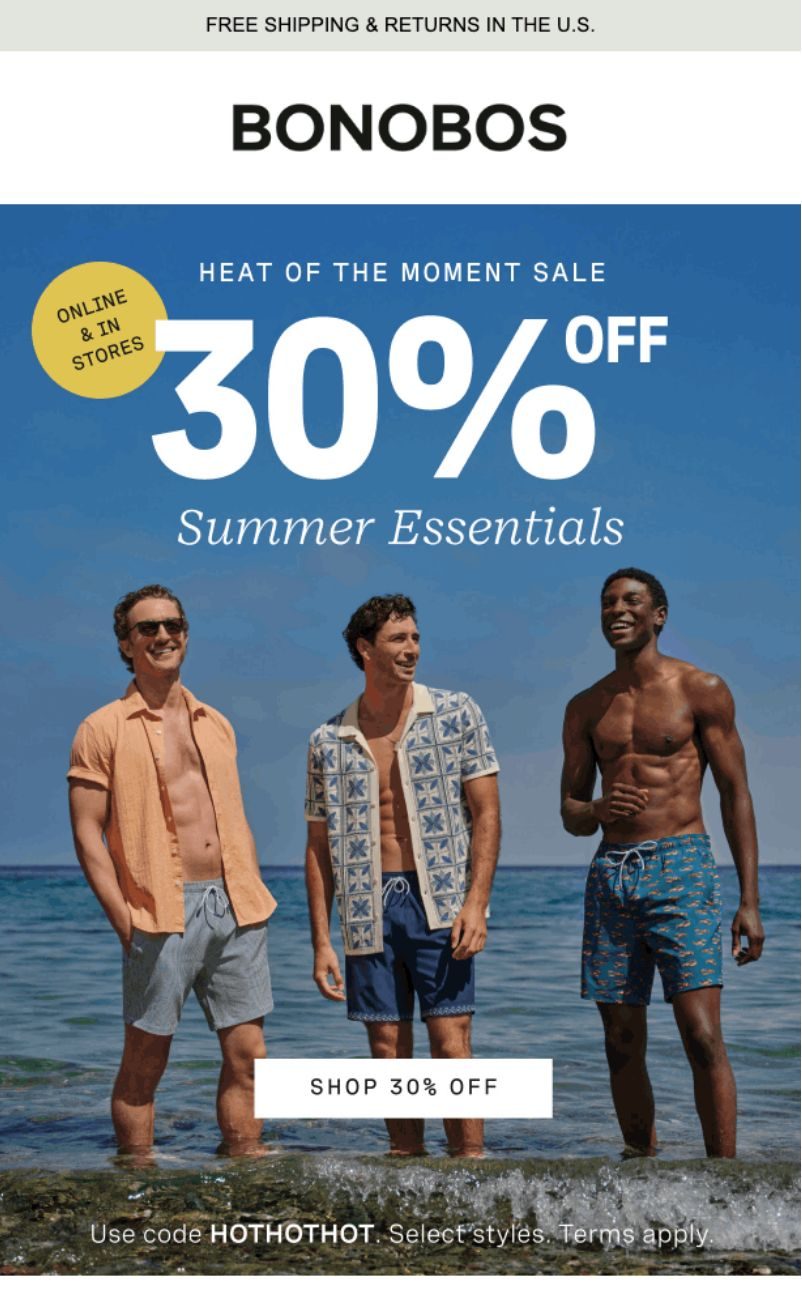
The offer: 30% off summer essentials. Not sitewide, not “up to,” not tiered. One collection, one number, done.
Why it works: There’s nothing to decode at 7am on a Wednesday. The customer knows the deal before they scroll, which is rarer than it sounds when most sale emails need a calculator and a FAQ page. Bonobos used a product grid showing exactly what was included, so the email did the selling without a single line of persuasion copy.
The risk: A flat percentage trains your list to wait for the next one. Bonobos avoids that by tying it to a seasonal moment and a specific collection, so it has a natural end date the customer actually believes.
| 02 of 06 |
Native: set your tiers around what products actually cost
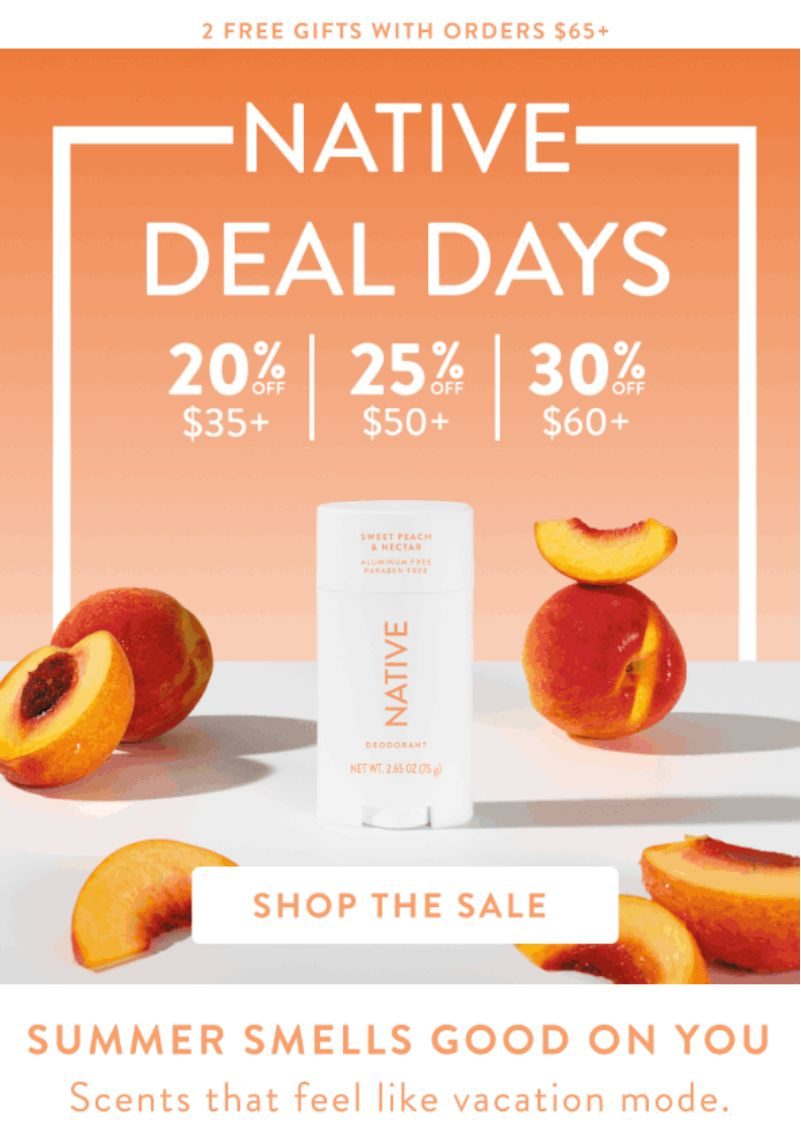
The offer: 20% off $35+, 25% off $50+, 30% off $60+. Three tiers, each one built around real price points in their catalog.
Why it works: Native sells deodorant, body wash, and skincare, which is stuff people buy in multiples. The first tier sits right at the current AOV, so most customers are already there. The next tier is literally 1 more product away, not a stretch. They don’t need the customer to change their behavior, just add 1 thing to the cart.
The move most brands miss: Native added in-cart messaging, “You’re $10 away from 25% off”, which turns a browse into a threshold chase. They also pre-built bundles that land customers at the next tier, so the customer doesn’t have to do the math themselves.
| 03 of 06 |
ciele: protect your pricing with a gift, not a discount
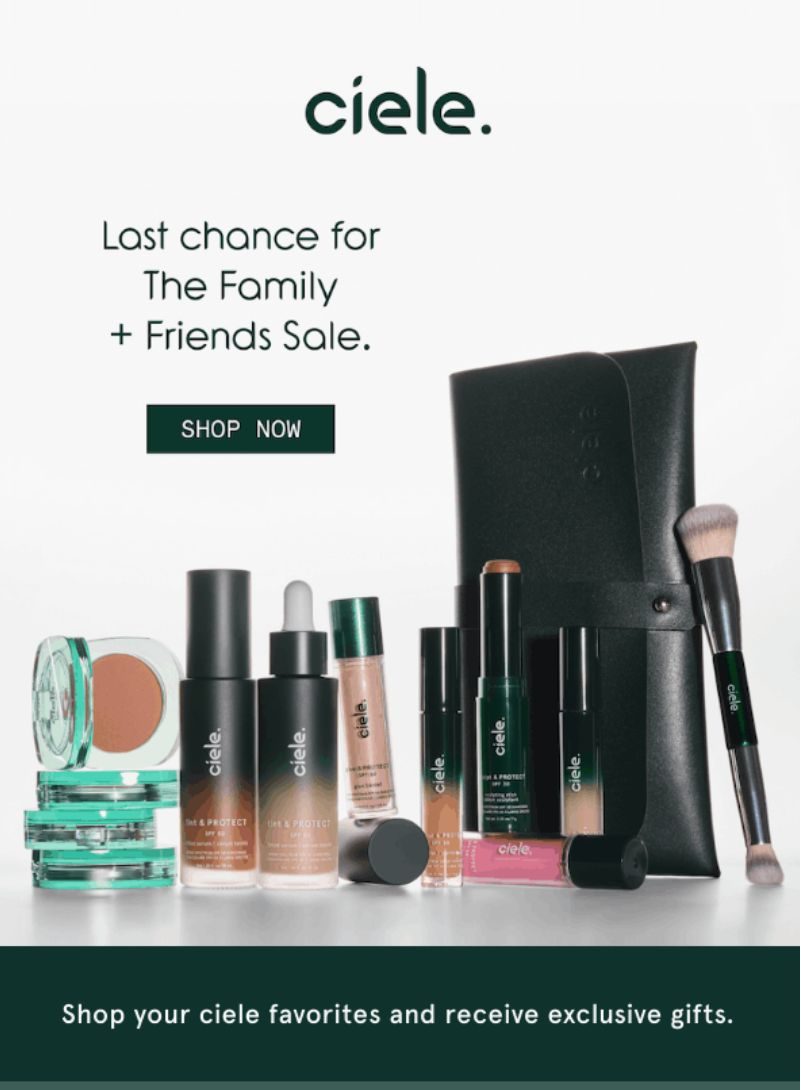
The offer: Spend $75 and get a makeup bag. Spend $100 and get the bag plus a brush. Spend $125 and get both plus a full-size glow and protect. No percentage off, no code, no red slash-through pricing anywhere in the email.
Why it works: ciele is a complexion and SPF brand sitting at a premium price, and a 20% off sale would undercut the positioning they spent years building. The gift-with-purchase gives the customer a reason to buy this week instead of next month without ever attaching a discount to the brand. The key: the gifts were real product, a bag, a brush, a full-size SPF, not a logo sticker in a poly bag.
The urgency play: The whole thing ran as a named Family and Friends Sale with a real end date, and the email you see here is the last-chance send, so the deadline does the work a countdown timer usually fakes.
| 04 of 06 |
Malbon: call it an archive sale, not a clearance
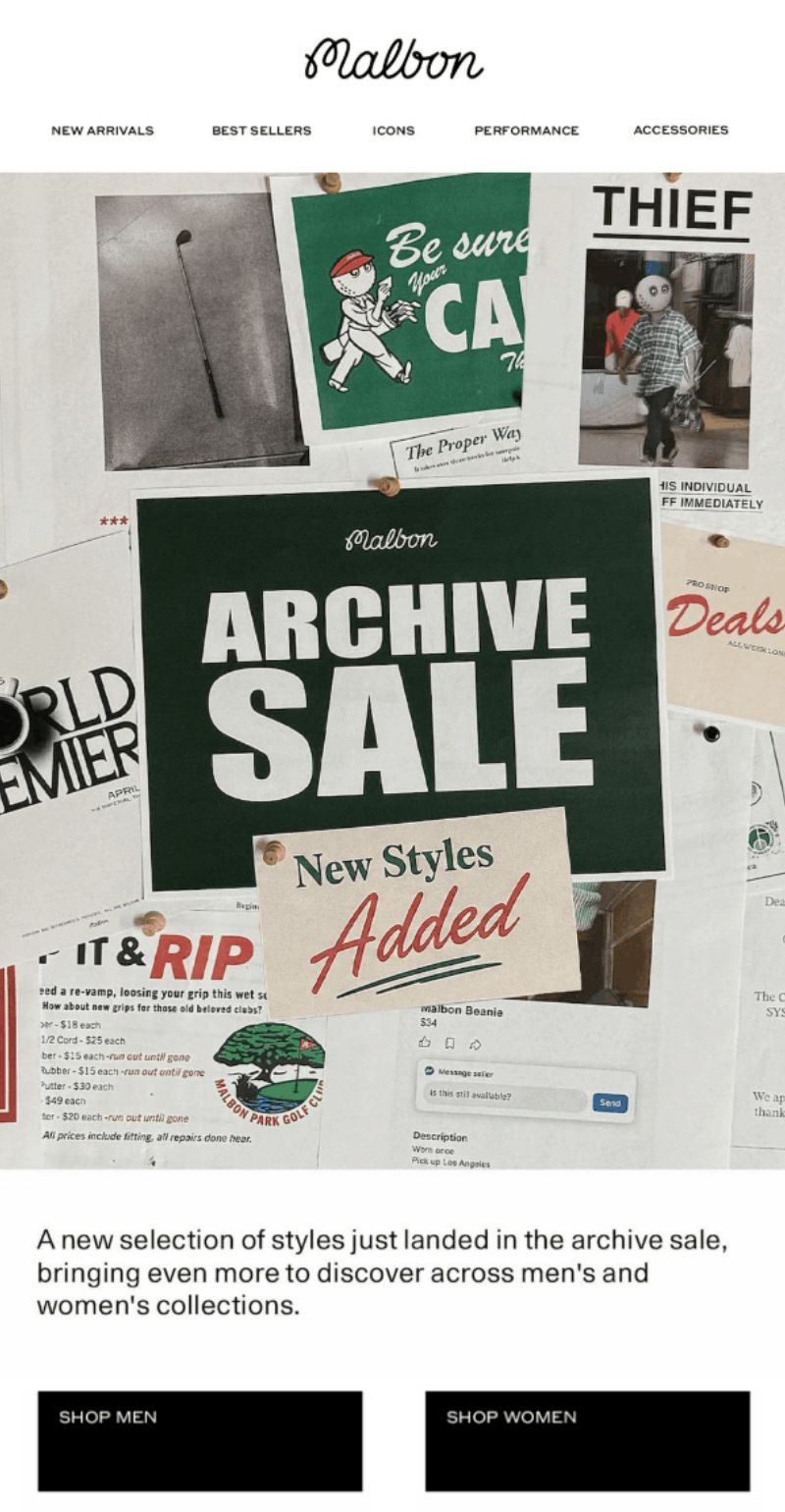
The offer: An “archive sale” on past-season pieces. Same mechanic as a clearance, discounted older inventory, but completely different customer experience.
Why it works: That single word changes “we need to move old stuff” into “we’re reopening the vault.” Malbon built a dedicated archive page, sorted by category and customer favorites, not by deepest discount. The customer shows up to browse and discover, not to bargain hunt. It’s a completely different mindset, and the margins are better because the perceived value stays high.
What most brands get wrong: They throw clearance items on a filtered page of the main shop with “up to 70% off” banners. Malbon gave the archive its own destination, its own look, and sent follow-up emails as new items dropped in, turning a 1-touch send into a multi-email moment.
| 05 of 06 |
Cocokind: build a bundle around a routine, not a discount
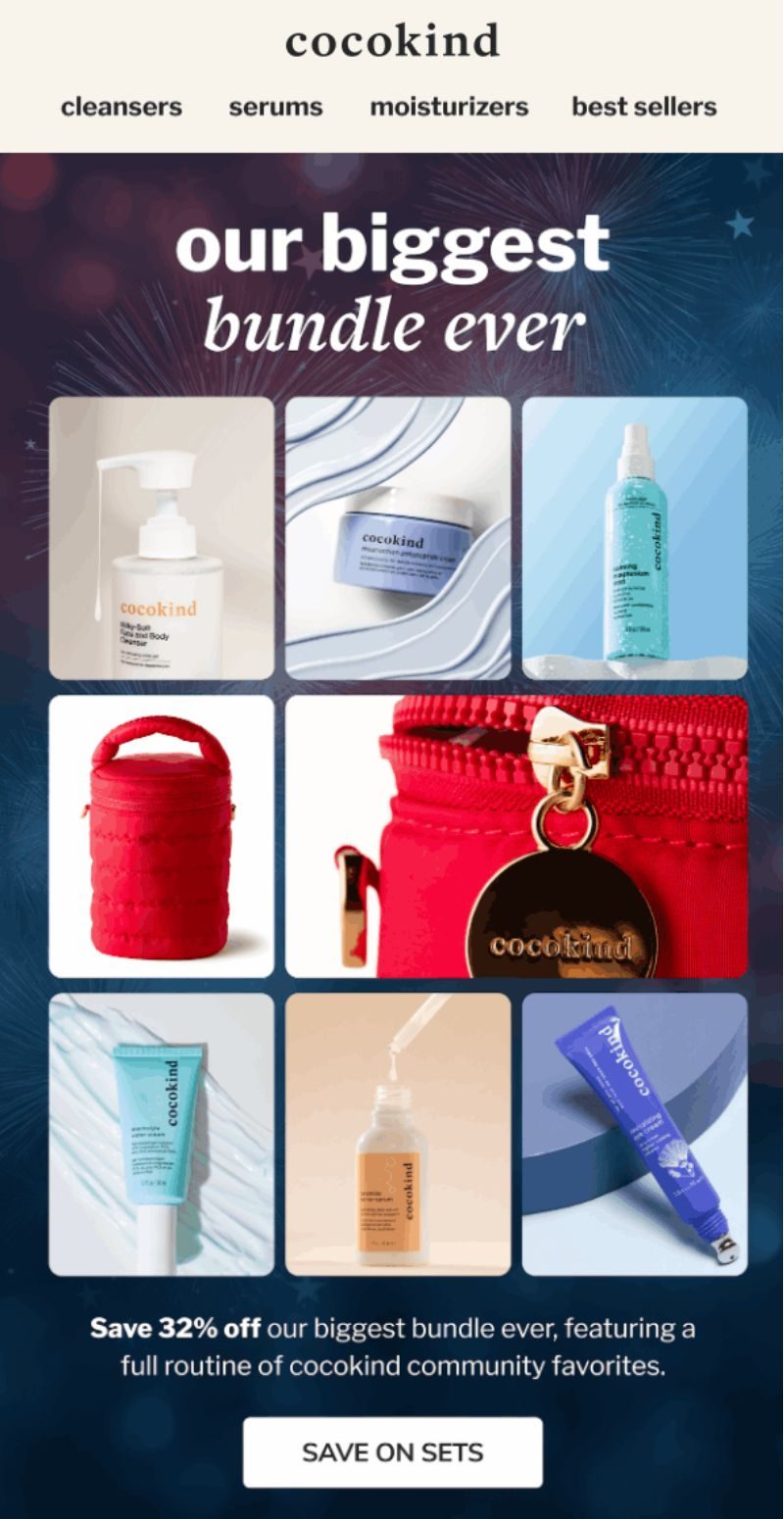
The offer: Their “biggest bundle ever” at 32% off. But the bundle wasn’t random products grouped for a price break, it was a complete skincare routine: cleanser, serum, moisturizer, SPF.
Why it works: The customer isn’t buying 4 discounted products. They’re buying a system, “the morning routine” or “the starter kit”, and the narrative carries the price. The AOV jumps because the bundle includes items they wouldn’t have found browsing on their own. Cocokind showed the original price next to the bundle price so the savings were immediate and obvious.
Where bundles hit hardest: Skincare, wellness, food, and gifting, any category with a built-in story. “The holiday gift set” sells itself. “4 random things at 30% off” does not.
| 06 of 06 |
Pela: add a guide to your BOGO so the customer can actually use it
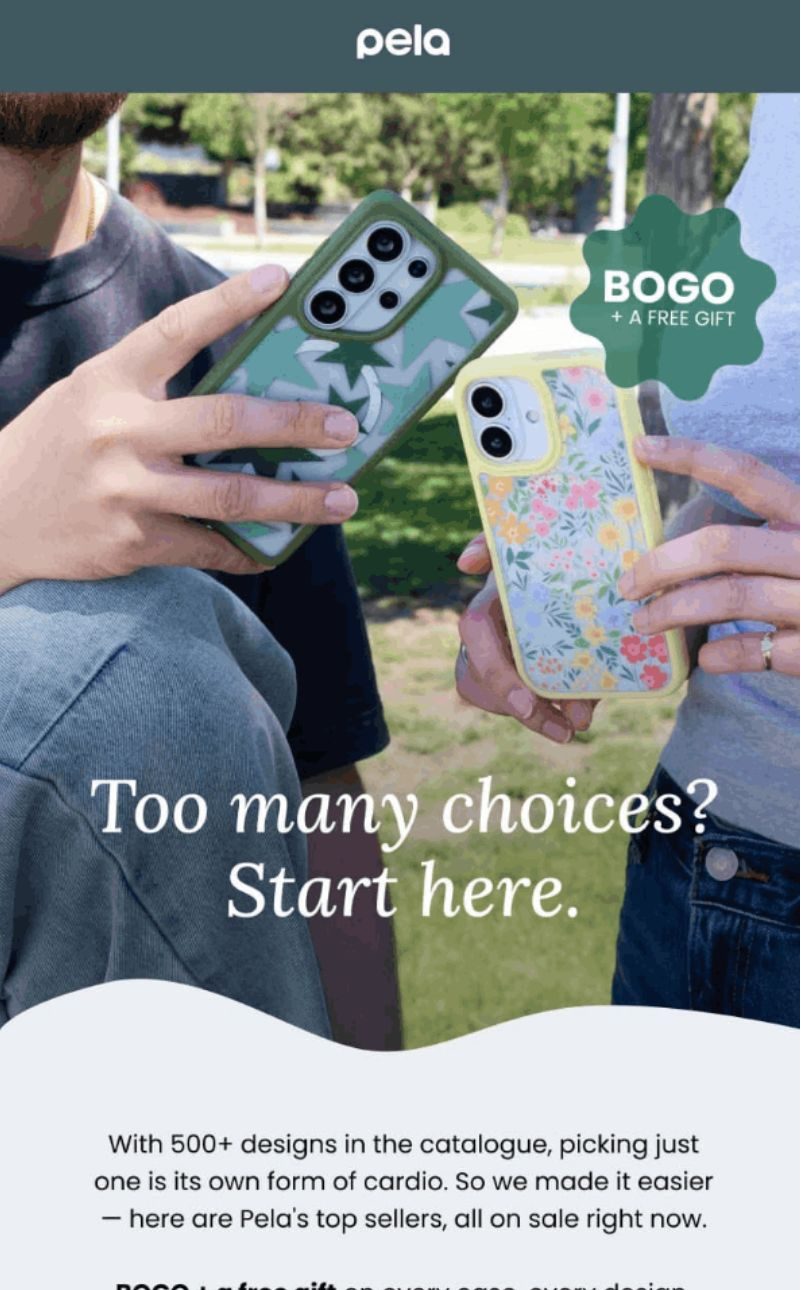
The offer: BOGO + a free gift. Generous on paper. But the real move was what came after the offer: Pela pointed customers directly at a best-sellers collection and said “not sure where to start? Shop customer favorites.”
Why it works: BOGO on a catalog with 200 SKUs is a recipe for decision paralysis. The customer has too many options, spends 4 minutes trying to figure out the best combo, and closes the tab. Pela solved it with 1 curated collection page and a subject line that told the customer exactly where to go. The guide is what turns a generous offer into a usable one.
The margin note: BOGO gets expensive fast. Pela ran it on products with healthy margins and repeat-purchase patterns, phone cases people buy in multiples, not on their highest-cost items.
Pick the structure that fits the job
The best Q4 sale isn’t the deepest discount. It’s the one that matches the job you actually have this week:
✓ Moving old inventory → archive sale
✓ Growing AOV → tiered discount
✓ Protecting brand pricing → gift-with-purchase
✓ Reducing decision fatigue → guided BOGO
✓ Increasing order frequency → routine bundle
✓ Clearing one category fast → single-collection discount
Shein closed its $100 million acquisition of Everlane
Shein finalized the deal for roughly $100 million. Everlane built its name on transparent pricing and minimalist basics, and the price tag says the brand equity held even as growth slowed. What changes under Shein's ownership is an open question.
DTC acquisition costs are up 40–60% in 2 years
Shopify's latest numbers put the average DTC brand's customer acquisition cost increase at 40–60% over the past 2 years, driven by shifting algorithms on Meta and Google. The brands adjusting fastest are the ones treating retention as the primary revenue channel.
SET Active's community commerce numbers are worth a look
SET Active reports 73% higher LTV and 51% higher purchase frequency among community members compared to non-members. Those numbers attached to a real DTC brand make the case for community harder to wave away heading into Q4.