Everyone tests subject lines. Nobody tests this.
It’s Friday.
Somewhere in a doc you haven’t opened since August, there’s a Black Friday plan with eleven ideas in it and no data behind a single one.
You’ve got six weeks to turn two of those into facts. Here’s what we’d test, what we’d skip, and a prompt that writes the first test for you. 👇
5 tests to run before Black Friday (while there's still time)
One of the biggest mistakes we see every year is brands treating Black Friday like a giant A/B test. New offers, new messaging, new creative, new segmentation, all at once, in the week every email matters most.
Get the testing out of the way now. Six weeks is enough to gather real data, make adjustments, and go into the last week of November knowing instead of hoping. Here are the five we’d have on every list.
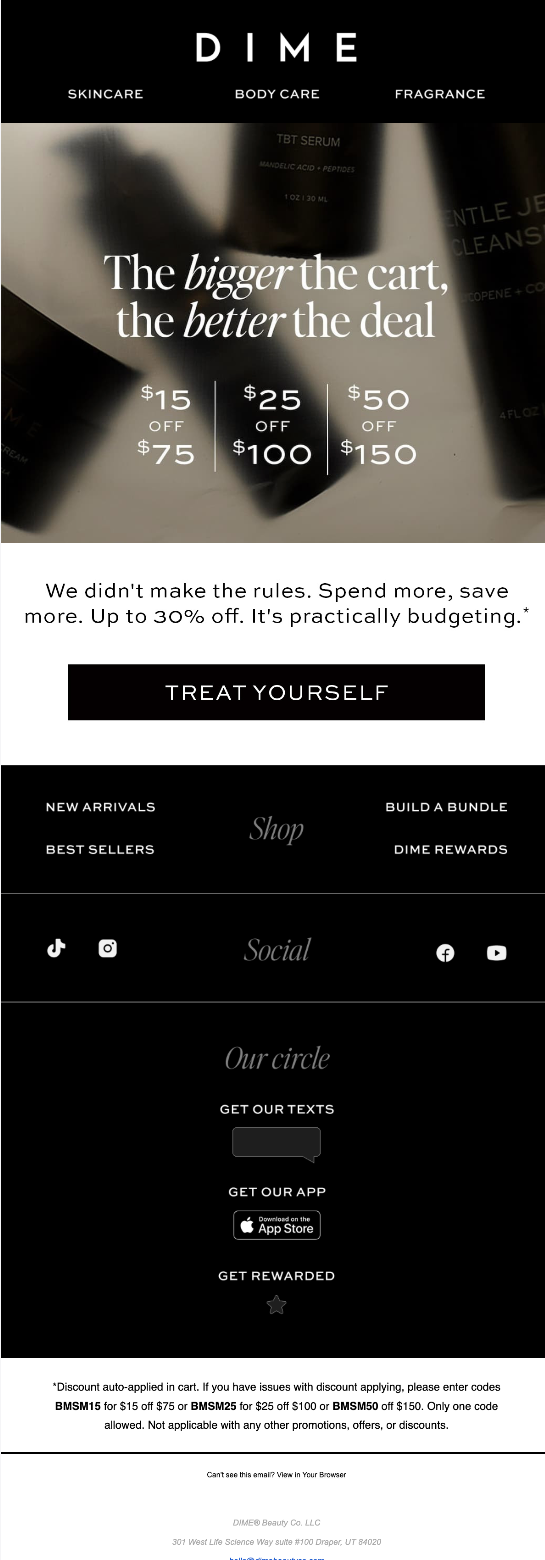
1. Test your offer positioning
A bigger discount doesn’t automatically mean more revenue. Often it’s how the offer is framed, not the offer itself, that moves somebody to buy.
Compare framings and watch revenue per recipient, not clicks or conversion rate.
✓ Percentage off vs dollar amount off
✓ Discount vs free gift
✓ Sitewide sale vs category-specific sale
✓ Buy more, save more vs a flat discount
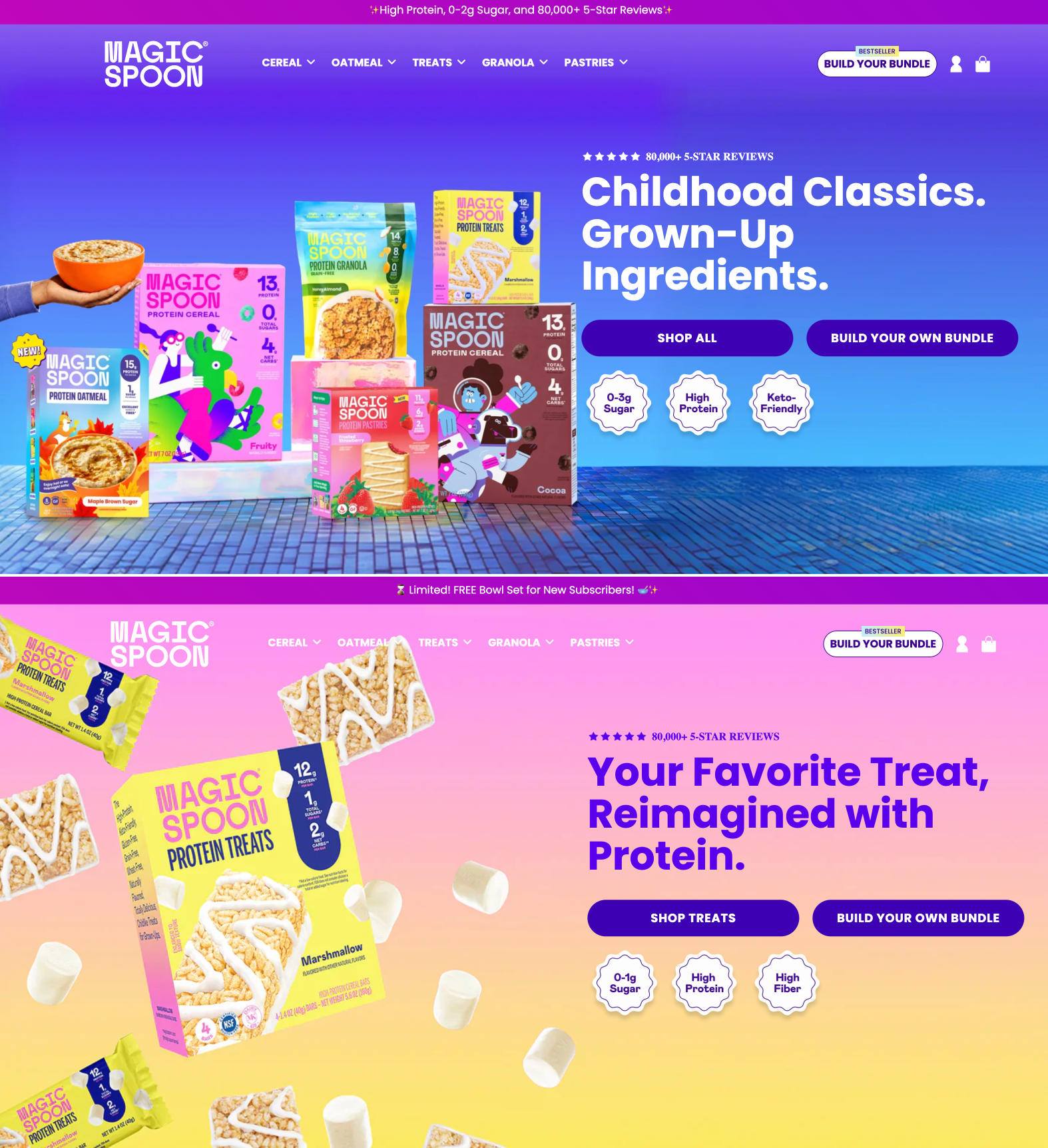
2. Test your hero section
The hero sets the tone for everything under it. If it doesn’t grab attention or make the value obvious, most subscribers never get further.
Small creative changes move engagement more than you’d expect, especially in a season when every inbox is crowded.
✓ Hero product vs lifestyle imagery
✓ Benefit-first headline vs offer-first headline
✓ One featured product vs a collection
✓ Static image vs animated GIF
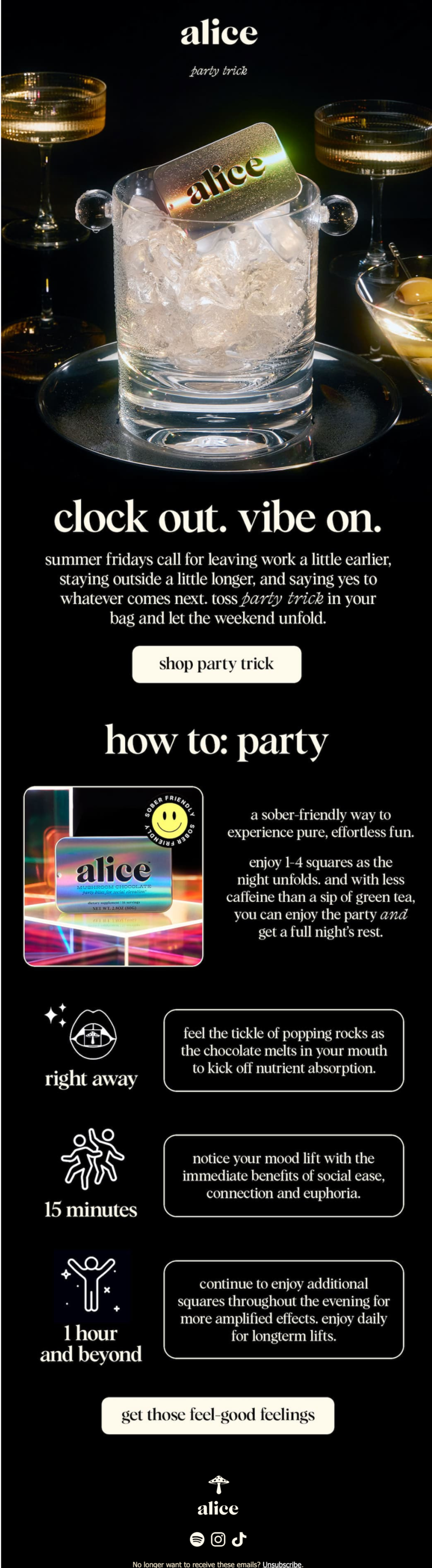
3. Test your segmentation strategy
One email rarely performs equally across every audience. The more relevant the message, the better its odds of driving a purchase.
Holiday campaigns are the best excuse you will ever have to stop sending every promotion to the whole list.
✓ VIP customers vs everyone else
✓ First-time customers vs repeat buyers
✓ Highly engaged subscribers vs your full list
✓ Recent purchasers vs lapsed customers
4. Test your product recommendations
Recommendation blocks usually end up an afterthought, and they are one of the easiest ways to lift average order value.
The right recommendation should read like a natural next step, not a second sales pitch.
✓ Best sellers
✓ Frequently bought together
✓ Recently viewed
✓ Complete the routine
✓ Staff favorites

5. Test your CTA
Everybody tests subject lines. Almost nobody tests the button people actually click. A clearer, more specific CTA can lift click-through without changing anything else in the email.
Keep each test to one variable so you can tell what moved the number.
✓ Shop now vs claim my offer
✓ Build my bundle
✓ Get early access
✓ See best sellers
✓ Unlock my discount
Black Friday isn’t the week to wonder which offer performs best, or whether a different audience would have converted harder. Those questions are a lot cheaper to answer now, while there is still time to collect data and act on it.
The brands that win Q4 aren’t running more tests than everyone else. They ran the right ones earlier.
Section one of today’s article says to test how the offer is framed before you test the offer itself. Here is the prompt that writes the test for you.
Paste it into ChatGPT or Claude with your planned promo underneath:
Copy this prompt You are a retention marketer building an offer test for Black Friday. Here is my product, my margin and the discount I was planning to run: [paste]. Write four versions of the same promotion as four subject line and hero headline pairs: (1) percentage off, (2) the same value expressed as a dollar amount, (3) the same value as a free gift instead of a discount, (4) a buy more save more tier. Keep my brand voice exactly as it reads in the copy I pasted. For each one, tell me in a single line which customer it is best for and what it is likely to do to average order value. Then tell me which two to test against each other first, and why the other two can wait. |
The last line is the part that earns its keep. Ask a model for four options and it hands you four and leaves the choosing to you, which is how eleven ideas end up in a doc nobody opens.
Ruggable moved $1M out of Meta and into creators
About 10% of total marketing spend has shifted from performance channels into influencers and connected TV since last August, per Modern Retail. The creator program did roughly $3 million in revenue in month one, doubled in month two and tripled by month three. Influencer management went from a team on spreadsheets and DMs to one person. Brand spend grows another 15 to 20% next year.
A self-funded hair extension brand priced at $425
Alex Brown spent two decades as a celebrity stylist, including a stint assisting Jen Atkin, and launched Ruti Ruti on August 31, per Beauty Independent. Self-funded, no outside money, no retail. A seven-piece set starts at $425, a four-piece at $225, in 15 shades, aimed at fine to medium density hair rather than more hair.
Two details worth stealing. Every set ships with a sample weft so you can check the color before opening the box, and customers can send a photo for a custom match. That is a return rate problem solved in the packaging instead of the policy page.
The investor was on the monthly subscription first
Something & Nothing raised a $6.4 million seed led by Venrex, per Food Business News, taking the premium soda brand founded by Olly Dixon and Rupert Pugsley in 2020 to $15.7 million total. It sells through H-E-B, Whole Foods, Erewhon, Amazon and its own site. Venrex co-founder Mark Esiri said he was a genuine customer first, on a monthly subscription, before he was an investor.


