You’re forgetting a whole list this holiday season
Every gift shopper is asking the same question: will they actually like this?
Plenty of holiday emails skip right past it. They show the products, the discount and the deadline, then leave the shopper to work out who each thing is for (we’ve all stood in a store doing that math).
Athletic Brewing’s gift email answers it in five words: “For the NA-curious or first-timers.” The shopper knows who the bundle is for before they’ve read anything else.
This morning, we’re breaking down why that one line works, where the email could convert even harder, and what you can steal for your own gift sends. 👇
Live webinar
Bring your Black Friday plan to us tomorrow
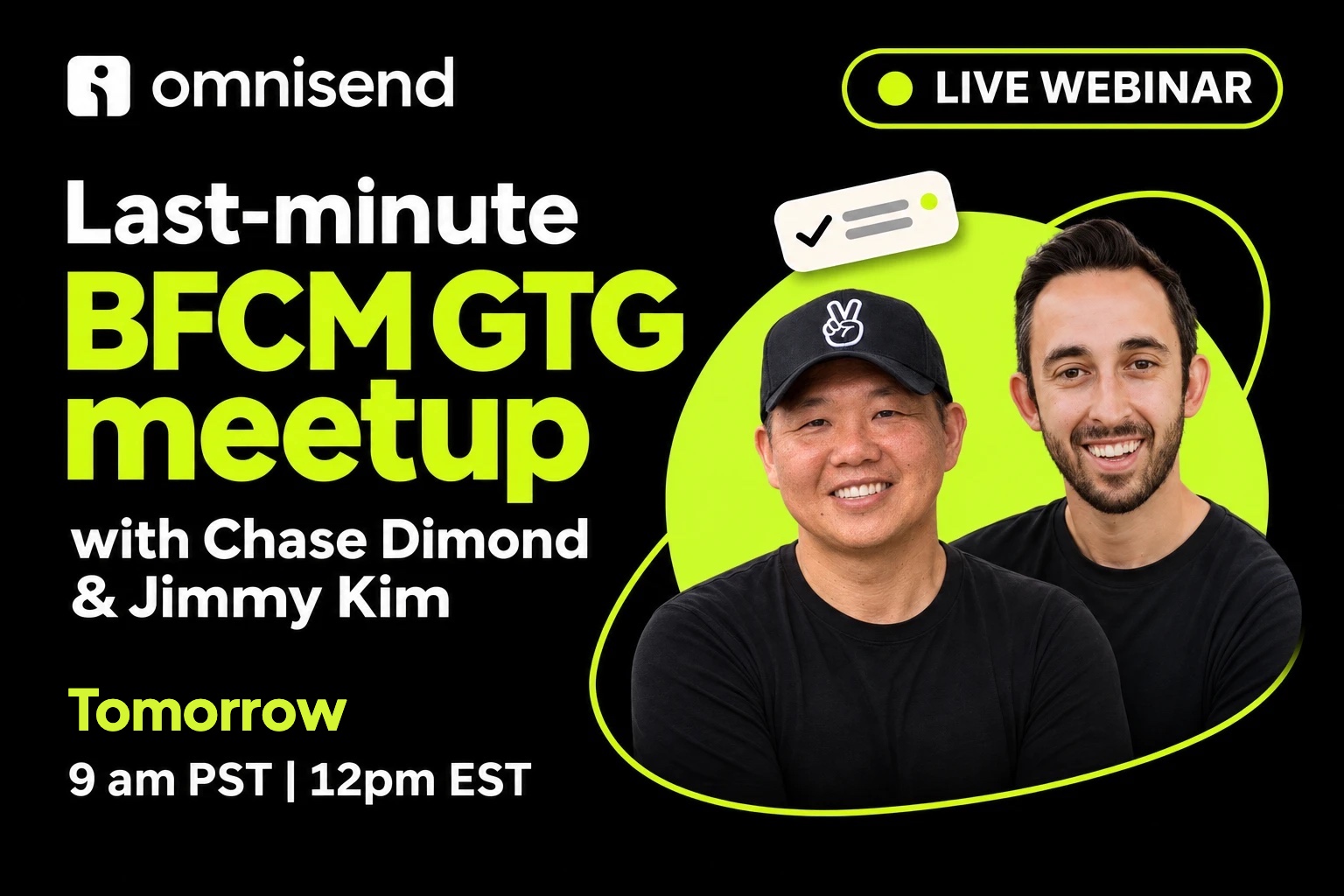
Tomorrow, November 17th at 9am PST / 12pm EST, we’re going live with the Omnisend team for an hour of fixing Black Friday plans. It’s free, and it’s ten days before Black Friday, which is about the last spare hour you’ll get this month.
Here’s what you’ll leave with:
✓ The three-way list split that keeps your best customers at the front of the line
✓ A five-minute check for your cart and browse flows
✓ The send schedule we’d run Black Friday week if it were our store
✓ The one number to check an hour after your first send, before your boss asks
Bring your questions and your half-built flows. We’ll get through as many as we can, live.
Segment of the week
Last year’s holiday gift buyers
Here’s a group most of us forget about until it’s too late: people whose first order came in between November 15th and December 24th last year, and who haven’t ordered since.
Plenty of them never came back because they weren’t shopping for themselves. They were buying for someone else, and they’re about to do it again.
How to build it: first order placed between November 15th and December 24th, 2025, and zero orders since. If your store tracks gift messages or ship-to addresses, add anyone who sent an order somewhere other than their own address.
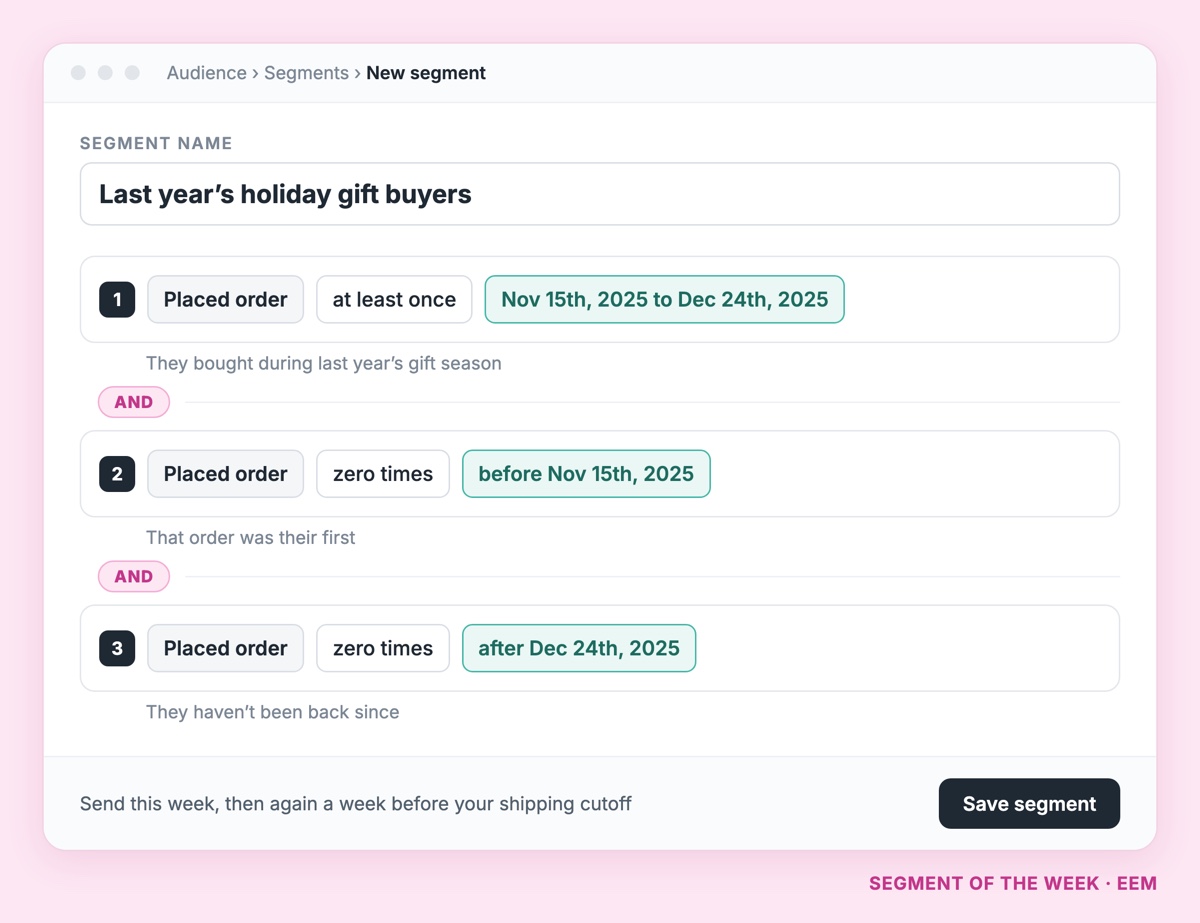
What to send them: a gift email that picks up where last year left off. Open with “Shopping for them again?” and show a few new gifts near what they spent last time. Put your shipping cutoff right under the button.
When: this week, then again about a week before your cutoff.
Leave the win-back discount out. The reminder of who they shopped for last year does the work.
Email breakdown
Athletic Brewing’s gift email: tell shoppers who each bundle is for
Gift shoppers start with a person and work back to a product.
Athletic Brewing makes non-alcoholic beer, and this holiday email is built around gift bundles. The smartest thing in it is one short line of copy that tells the giver exactly who a bundle is for. Let’s break it down.
See the full email on Really Good Emails →
Header block
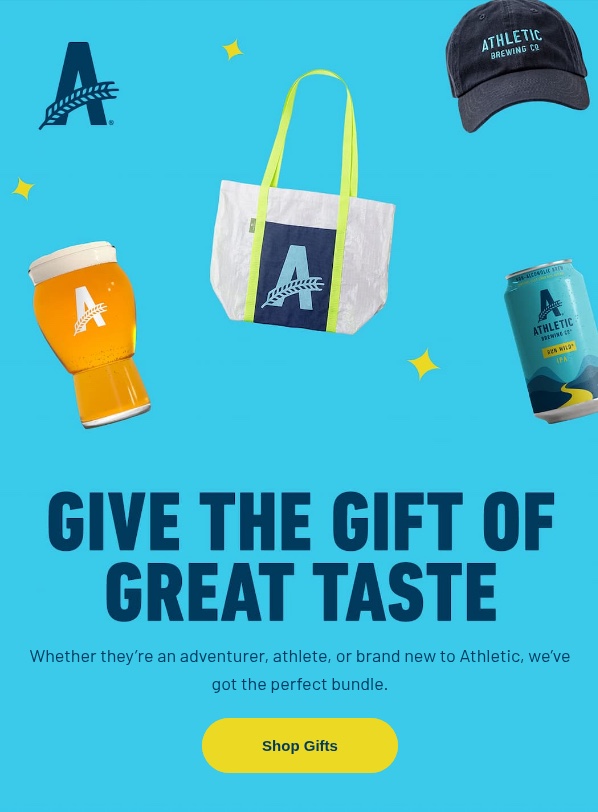
Let’s start at the top, where Athletic shows the hat, the tote and the glass right next to the can. That tells gift shoppers early that these bundles come with something to unwrap.
The headline names the job of the email. “Give the gift of great taste” tells the reader this is a gifting email in the first five words.
The subhead names three kinds of people. “Whether they’re an adventurer, athlete, or brand new to Athletic” gets the shopper picturing someone on their list before they scroll.
There’s one yellow button against a bright blue background, so there’s no question about where to tap.
The subject line carries the joke. “Because socks are a cry for help” pokes at the default gift to earn the open, so the email itself can stay clean and on brand.
What we’d do differently:
The subhead promises bundles for adventurers, athletes and first-timers, and the email only shows one of them. Either show all three or cut the subhead down to the one it delivers.
Add a shipping cutoff under the button. A line like “Order by December 15th for delivery by Christmas” is the most useful thing a gift email can say in December.
Body block
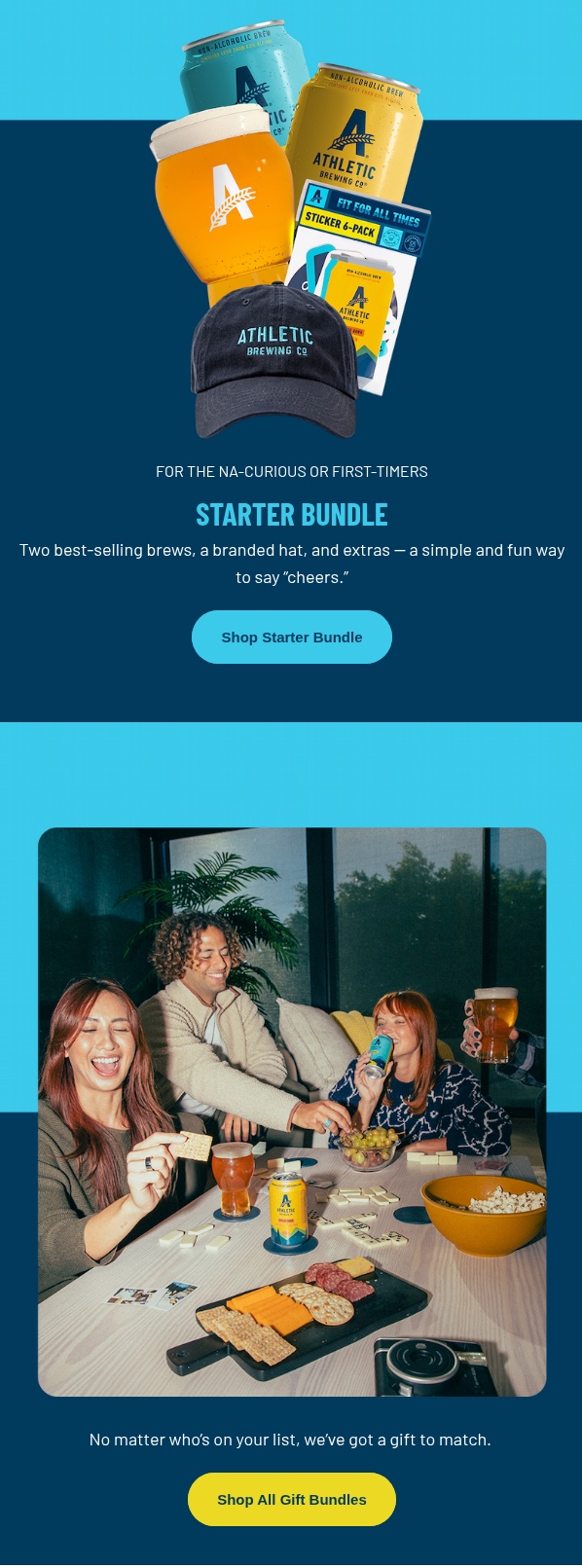
Now let’s dig into the body, where the best line in the email sits above the product name.
“For the NA-curious or first-timers” labels the bundle by who it’s for. The shopper can match the gift to a person before they compare what’s inside.
“Starter Bundle” is a plain name that backs up the label. A first-timer’s bundle called the Starter Bundle needs no explanation.
The game-night photo shows the beer on a table with friends, so the shopper can picture where the gift ends up.
“Shop All Gift Bundles” catches anyone the Starter Bundle didn’t fit.
What we’d do differently:
Show the price. Budget is the first filter for a gift, and a bundle with no price makes the shopper click just to find out if it’s in range.
Spell out the “extras.” The photo shows a glass and a sticker pack, so name them in the copy and make the bundle feel bigger.
Give the adventurer and the athlete their own bundles, each with a label, a photo and a button. The header already promised them, and the label treatment is the strongest thing in this email.
Footer block
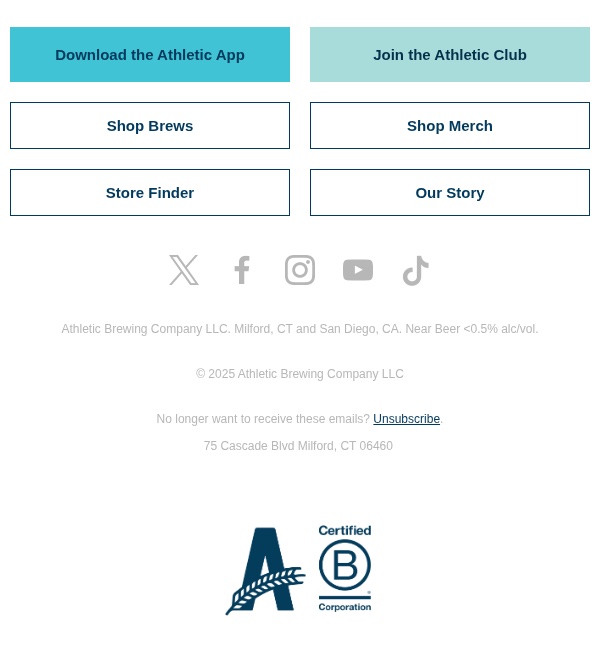
As the email winds down, Athletic uses the footer to push the relationship past this one order.
“Download the Athletic App” and “Join the Athletic Club” get the two colored buttons, above Shop Brews and Shop Merch. Both are retention plays, and Athletic ranks them first.
Store Finder gives a late shopper a way to buy today, in person.
The B Corp logo is a trust signal for someone spending money on a gift.
What we’d do differently:
Add a gift card link. Once shipping cutoffs pass, a digital gift card is the only gift that still arrives on time.
Where this email works
Let’s zoom out and see where this fits in your holiday calendar.
Gift guides: labeling each product by who it’s for lets shoppers match a gift to a person before they compare products.
Products people are nervous to try: a “for first-timers” bundle gives someone a low-risk way to buy your product for a friend who’s never had it.
Bundles that lift AOV: a curated set raises the order value and saves the giver from building a cart one item at a time.
Final takeaway
Gift shoppers start with a person, and the faster your email connects that person to a product, the easier the sale. Athletic does it with one line of copy that tells the giver exactly who the Starter Bundle is for.
The header promises three kinds of people, though, and the body only delivers one. Give each bundle its own label and the email covers far more of the names on a shopper’s list.
When you sell gifts, label every product by who it’s for.
3 quick wins to steal next time
✓ Label each gift by who it’s for
✓ Put a price on every bundle
✓ Deliver every persona you name in the header


